Case Studies

Recent Engagements

Detailed examinations of cyber risk, client-data protection, access governance, and operational security across professional services firms and technology platforms.

Case Study

Cybersecurity Foundations Assessment for a Growing Manufacturing Company

Blackwood Enterprises conducted a cybersecurity foundations assessment for a growing manufacturing company seeking greater visibility into the security risks emerging across its expanding technology environment.

The organization supported commercial and residential customers and increasingly relied on cloud platforms, enterprise business systems, third-party vendors, digital workflows, and externally accessible customer and employee services. These technologies supported collaboration, service delivery and continued growth, but the governance practices surrounding them had not matured at the same pace.

Leadership wanted an independent view of the company’s current cybersecurity position and a practical improvement plan aligned with normal business operations.

The assessment reviewed identity and access management, administrative privileges, vendor accountability, customer-data visibility, security documentation, employee account lifecycle practices and externally visible digital assets.

The review found that the organization’s principal cybersecurity challenge was not a single isolated technical weakness. Risk had accumulated through several connected conditions:

  • Access was not consistently reviewed after it was granted.

  • Some reviewed accounts held broader administrative privileges than their operational responsibilities required.

  • Responsibility for several important vendors was not clearly documented.

  • Customer information was distributed across systems without one maintained view of its locations and movement.

  • Important processes depended on institutional knowledge.

  • Publicly visible digital assets were not managed through one centralized inventory.

  • Onboarding, role changes and offboarding were handled inconsistently across departments.

The most urgent improvement areas were recurring access governance and the control of administrative privileges. These issues received the highest rating because inappropriate or excessive access could materially increase the impact of credential compromise, phishing, employee error or unauthorized activity.

The organization’s overall cybersecurity maturity was assessed as Developing. Foundational controls and capable operational practices were present, but several security activities remained informal, inconsistently documented or dependent on individual employees.

A Defined level of maturity was considered a reasonable 12-month target if leadership assigned clear ownership, implemented the priority recommendations and established recurring review processes.

The engagement gave leadership a clearer and more connected view of cybersecurity risk across people, processes, technology and third-party relationships. It also provided a sequenced roadmap for improving governance without requiring a large compliance initiative or disrupting normal operations.

Note:

This case study has been anonymized to protect client confidentiality. Identifying details have been removed or generalized while preserving the engagement’s scope, methodology and assessment conclusions.

Case Study

Cybersecurity Foundations Assessment for a Growing Manufacturing Company

Blackwood Enterprises conducted a cybersecurity foundations assessment for a growing manufacturing company seeking greater visibility into the security risks emerging across its expanding technology environment.

The organization supported commercial and residential customers and increasingly relied on cloud platforms, enterprise business systems, third-party vendors, digital workflows, and externally accessible customer and employee services. These technologies supported collaboration, service delivery and continued growth, but the governance practices surrounding them had not matured at the same pace.

Leadership wanted an independent view of the company’s current cybersecurity position and a practical improvement plan aligned with normal business operations.

The assessment reviewed identity and access management, administrative privileges, vendor accountability, customer-data visibility, security documentation, employee account lifecycle practices and externally visible digital assets.

The review found that the organization’s principal cybersecurity challenge was not a single isolated technical weakness. Risk had accumulated through several connected conditions:

  • Access was not consistently reviewed after it was granted.

  • Some reviewed accounts held broader administrative privileges than their operational responsibilities required.

  • Responsibility for several important vendors was not clearly documented.

  • Customer information was distributed across systems without one maintained view of its locations and movement.

  • Important processes depended on institutional knowledge.

  • Publicly visible digital assets were not managed through one centralized inventory.

  • Onboarding, role changes and offboarding were handled inconsistently across departments.

The most urgent improvement areas were recurring access governance and the control of administrative privileges. These issues received the highest rating because inappropriate or excessive access could materially increase the impact of credential compromise, phishing, employee error or unauthorized activity.

The organization’s overall cybersecurity maturity was assessed as Developing. Foundational controls and capable operational practices were present, but several security activities remained informal, inconsistently documented or dependent on individual employees.

A Defined level of maturity was considered a reasonable 12-month target if leadership assigned clear ownership, implemented the priority recommendations and established recurring review processes.

The engagement gave leadership a clearer and more connected view of cybersecurity risk across people, processes, technology and third-party relationships. It also provided a sequenced roadmap for improving governance without requiring a large compliance initiative or disrupting normal operations.

Note:

This case study has been anonymized to protect client confidentiality. Identifying details have been removed or generalized while preserving the engagement’s scope, methodology and assessment conclusions.

Case Study

Security Visibility & Risk Management Review of a Growing Technology Company

Blackwood Enterprises worked with a growing technology company to improve visibility into customer data handling, system ownership, third-party dependencies, access governance and security documentation.

As the company expanded and began working with larger customers, security reviews became an increasingly important part of the sales and customer due-diligence process. The organization already had many security controls and operational practices in place, but the information needed to explain and demonstrate those practices was distributed across employees, teams and tools.

Customer security questionnaires required extensive coordination between leadership, engineering and operations. Ownership of several important systems and vendors was not consistently documented. Customer data flows relied heavily on institutional knowledge, access-lifecycle processes varied across departments and security evidence was stored in multiple locations.

Over a four-week engagement, Blackwood conducted eight stakeholder interviews, facilitated six working sessions, assessed 14 production systems, reviewed 11 third-party vendors and evaluated more than 20 security and operational processes.

The engagement documented how customer information moved through the company’s environment, established ownership for identified critical systems and vendors, reviewed privileged access and employee-lifecycle practices, and created a centralized security documentation framework.

The principal improvement areas involved multi-factor authentication coverage, system ownership, customer data visibility, offboarding consistency and security-document management.

The organization’s foundational security-governance maturity was assessed as Developing. Important practices existed, but several depended on informal knowledge, manual coordination or inconsistent ownership. The engagement established defined foundations in selected areas, including system inventory, vendor inventory, ownership assignment, customer data mapping, offboarding procedures and customer security-review documentation.

By the end of the engagement, leadership had a clearer and more reusable view of the company’s systems, vendors, customer data flows, access responsibilities and security practices. The recommended next stage was to operationalize and maintain those foundations through recurring access reviews, vendor oversight, governance reporting, control monitoring and customer trust processes.

Note:

This case study has been anonymized to protect client confidentiality. Identifying details have been removed or generalized while preserving the engagement’s scope, methodology and documented outcomes.

Case Study

Security Visibility & Risk Management Review of a Growing Technology Company

Blackwood Enterprises worked with a growing technology company to improve visibility into customer data handling, system ownership, third-party dependencies, access governance and security documentation.

As the company expanded and began working with larger customers, security reviews became an increasingly important part of the sales and customer due-diligence process. The organization already had many security controls and operational practices in place, but the information needed to explain and demonstrate those practices was distributed across employees, teams and tools.

Customer security questionnaires required extensive coordination between leadership, engineering and operations. Ownership of several important systems and vendors was not consistently documented. Customer data flows relied heavily on institutional knowledge, access-lifecycle processes varied across departments and security evidence was stored in multiple locations.

Over a four-week engagement, Blackwood conducted eight stakeholder interviews, facilitated six working sessions, assessed 14 production systems, reviewed 11 third-party vendors and evaluated more than 20 security and operational processes.

The engagement documented how customer information moved through the company’s environment, established ownership for identified critical systems and vendors, reviewed privileged access and employee-lifecycle practices, and created a centralized security documentation framework.

The principal improvement areas involved multi-factor authentication coverage, system ownership, customer data visibility, offboarding consistency and security-document management.

The organization’s foundational security-governance maturity was assessed as Developing. Important practices existed, but several depended on informal knowledge, manual coordination or inconsistent ownership. The engagement established defined foundations in selected areas, including system inventory, vendor inventory, ownership assignment, customer data mapping, offboarding procedures and customer security-review documentation.

By the end of the engagement, leadership had a clearer and more reusable view of the company’s systems, vendors, customer data flows, access responsibilities and security practices. The recommended next stage was to operationalize and maintain those foundations through recurring access reviews, vendor oversight, governance reporting, control monitoring and customer trust processes.

Note:

This case study has been anonymized to protect client confidentiality. Identifying details have been removed or generalized while preserving the engagement’s scope, methodology and documented outcomes.
Case Study

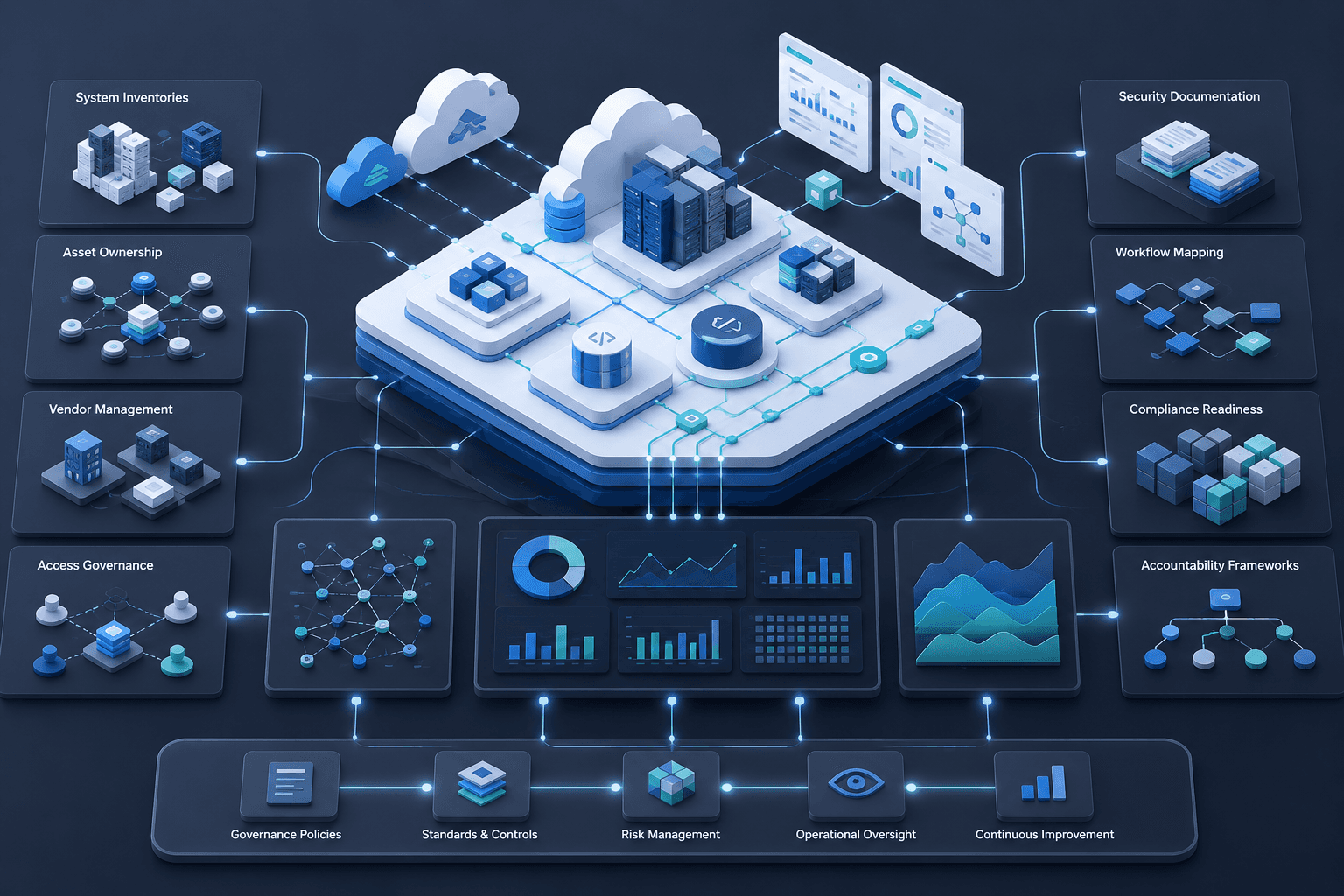
Cyber Risk & Data Protection Assessment of a Cloud-Based Financial Management Platform

Blackwood Enterprises conducted an independent Security Readiness Assessment for a cloud-based financial management platform that stores, processes and enables the sharing of sensitive personal, household and business financial information.

The engagement was designed to evaluate how the platform’s security controls, user-access model, information-sharing features and supporting operational practices contributed to the protection of financial records and the preservation of user trust. The assessment considered not only technical controls, but also the interaction between people, processes and technology across common user workflows.

The review identified identity security as the platform’s primary area of risk concentration. Because a single user account could provide access to several financial profiles and categories of sensitive information, account compromise had the potential to create significant privacy, financial and reputational consequences.

Additional opportunities were identified in access governance, account recovery, audit visibility, shared-access management, financial-record protection and user security awareness.

The platform demonstrated several foundational security practices, including authenticated access, logical separation of financial profiles, user-controlled sharing and centralized information management. No critical control deficiencies were identified within the scope of the engagement.

The platform’s overall security maturity was assessed as Developing. Existing practices provided a functional foundation, but further formalization, automation and oversight would help the organization reduce exposure, improve operational resilience and strengthen customer confidence as the platform continued to grow.

The recommended direction was to prioritize stronger identity protection and recovery controls, followed by improved access governance, monitoring, record integrity and user-facing security practices.

Case Study

Cyber Risk & Data Protection Assessment of a Cloud-Based Financial Management Platform

Blackwood Enterprises conducted an independent Security Readiness Assessment for a cloud-based financial management platform that stores, processes and enables the sharing of sensitive personal, household and business financial information.

The engagement was designed to evaluate how the platform’s security controls, user-access model, information-sharing features and supporting operational practices contributed to the protection of financial records and the preservation of user trust. The assessment considered not only technical controls, but also the interaction between people, processes and technology across common user workflows.

The review identified identity security as the platform’s primary area of risk concentration. Because a single user account could provide access to several financial profiles and categories of sensitive information, account compromise had the potential to create significant privacy, financial and reputational consequences.

Additional opportunities were identified in access governance, account recovery, audit visibility, shared-access management, financial-record protection and user security awareness.

The platform demonstrated several foundational security practices, including authenticated access, logical separation of financial profiles, user-controlled sharing and centralized information management. No critical control deficiencies were identified within the scope of the engagement.

The platform’s overall security maturity was assessed as Developing. Existing practices provided a functional foundation, but further formalization, automation and oversight would help the organization reduce exposure, improve operational resilience and strengthen customer confidence as the platform continued to grow.

The recommended direction was to prioritize stronger identity protection and recovery controls, followed by improved access governance, monitoring, record integrity and user-facing security practices.

Case Study

Operational Integrity & Documentation Governance Case Study

Blackwood Enterprises conducted a readiness and risk-reduction engagement for an early-stage compliance technology platform preparing for pilot deployments within Canadian industrial environments.

The client’s product was intended for use in audit-driven operational contexts where documentation integrity, traceability of decisions, and institutional accountability are prerequisites for deployment.

Blackwood’s engagement focused on identifying and reducing structural execution risks commonly observed in early-stage organizations entering regulated environments. These risks included fragmented institutional knowledge, undocumented operational progress, and the absence of governance structures capable of supporting audit-sensitive activities.

Blackwood implemented a bounded operational integrity framework designed to transition the organization from individual-driven execution toward system-driven operational discipline. The framework introduced gated operational workflows, centralized documentation custody, enforceable documentation governance rules, and a structured cadence of operational integrity reviews.

To support disciplined pilot preparation, Blackwood also developed an early-adopter intelligence layer identifying Canadian industrial organizations with significant documentation burdens and compliance exposure.

At the completion of the engagement, the client possessed auditable operational workflows, centralized institutional memory, defined custodianship of records, and a structured approach to pilot selection appropriate for compliance-sensitive environments.

The engagement was strictly limited to operational integrity and documentation governance. No claims were made regarding revenue outcomes, market adoption, or long-term product performance.

Case Study

Operational Integrity & Documentation Governance Case Study

Blackwood Enterprises conducted a readiness and risk-reduction engagement for an early-stage compliance technology platform preparing for pilot deployments within Canadian industrial environments.

The client’s product was intended for use in audit-driven operational contexts where documentation integrity, traceability of decisions, and institutional accountability are prerequisites for deployment.

Blackwood’s engagement focused on identifying and reducing structural execution risks commonly observed in early-stage organizations entering regulated environments. These risks included fragmented institutional knowledge, undocumented operational progress, and the absence of governance structures capable of supporting audit-sensitive activities.

Blackwood implemented a bounded operational integrity framework designed to transition the organization from individual-driven execution toward system-driven operational discipline. The framework introduced gated operational workflows, centralized documentation custody, enforceable documentation governance rules, and a structured cadence of operational integrity reviews.

To support disciplined pilot preparation, Blackwood also developed an early-adopter intelligence layer identifying Canadian industrial organizations with significant documentation burdens and compliance exposure.

At the completion of the engagement, the client possessed auditable operational workflows, centralized institutional memory, defined custodianship of records, and a structured approach to pilot selection appropriate for compliance-sensitive environments.

The engagement was strictly limited to operational integrity and documentation governance. No claims were made regarding revenue outcomes, market adoption, or long-term product performance.